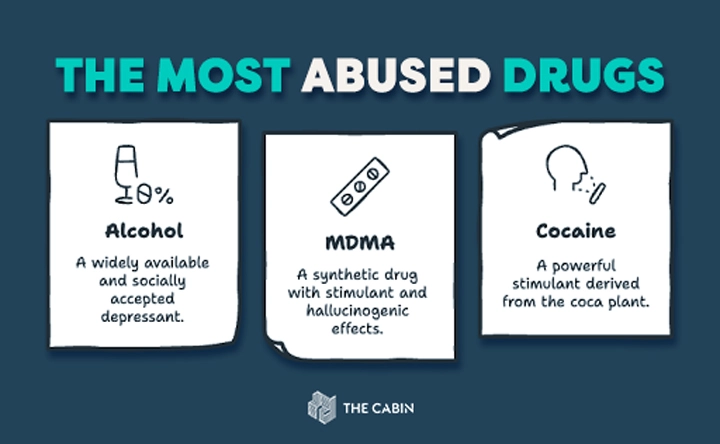
The ten most abused drugs include alcohol, 3,4-methylenedioxymethamphetamine (MDMA), and cocaine. The most frequently abused chemical substances include painkillers, cocaine, heroin, nicotine, prescription drugs, inhalants, and steroids. Drugs are any mind-altering substances that users use to get high or escape reality, ranging from street substances drugs like crack and heroin to common drugs found in medicine cabinets. Alcohol is the most commonly used drug, followed by 3,4-methylenedioxymethamphetamine (MDMA) and cocaine. Over-the-counter OTC drugs (cough syrups and cold medicines) have become popular drugs of abuse because they are easy to get without a prescription. Legal medicines are the most commonly abused drugs in the U.S., making prescription and over-the-counter medications just as dangerous as illegal street drugs when misused.
Most Abused Drugs are listed below.
1. Alcohol
Alcohol is a central nervous system depressant (ethanol) with high addiction potential, producing euphoria, sedation, and hallucinations through Gamma-aminobutyric acid (GABA) receptor interaction. It is characterized by visual hallucinations, confusion, tachycardia, hypertension, hyperthermia, agitation, and diaphoresis, according to Alcohol Withdrawal: Symptoms, Treatment & Timeline. (2024). Representing severe withdrawal symptoms. Alcohol remains legal with age restrictions administered orally or through inhalation, while tolerance develops rapidly, requiring increased doses. Short-term effects include impaired coordination and disinhibition with a 15-30 minute onset lasting 1-3 hours, while overdose presents mental confusion, respiratory depression, and potential death.
Long-term alcohol use produces liver cirrhosis, cardiovascular disease, neurotoxicity, and brain damage, with dangerous interactions, depressant effects when mixed with benzodiazepines or opioids. Medical applications include antiseptic use versus recreational consumption, while psychological impacts encompass mood disorders, cognitive impairment, and behavioral changes. Withdrawal syndrome of alcohol includes tremors, anxiety, and seizures. Requiring medical supervision to prevent fatal complications in dependent patients.
2. MDMA
The 3,4-methylenedioxymethamphetamine, or MDMA, is known as ecstasy or Molly. MDMA produces euphoria, mild hallucinations, and stimulation. The drug affects the central nervous system. It increases serotonin, dopamine, and norepinephrine levels. MDMA (Molly or Ecstasy) is a lab-made (synthetic) drug that has effects similar to stimulants like methamphetamine, according to NIDA (2024). Users consume MDMA orally through pills or powder. The substance is sometimes injected or snorted. The drug remains Schedule I controlled. It has no accepted medical use currently. MDMA creates moderate dependency potential. Tolerance develops with repeated use.
Short-term effects begin within 30-45 minutes. Effects last 3-6 hours maximum. Users experience increased energy and emotional warmth. Withdrawal symptoms include depression and fatigue. Long-term use causes memory problems. The drug damages serotonin neurons permanently. Overdose risks include hyperthermia and dehydration. The MDMA interacts dangerously with antidepressants, and heart problems and seizures occur. Psychological impacts include mood swings. Users develop anxiety and paranoia. Cognitive function decreases over time. Death rates increase with frequent use.
3. Cocaine
Cocaine is a highly addictive stimulant drug derived from the coca plant leaves that produces intense euphoria and heightened alertness. The substance operates as a central nervous system stimulant by blocking dopamine reuptake in reward pathways, creating mechanisms for continued use. Cocaine is an addictive stimulant drug that is native to South America, according to the National Institute on Drug Abuse. (2024). Cocaine | National Institute on Drug Abuse (NIDA). Users administer cocaine through multiple routes, including snorting powder form, injecting dissolved cocaine intravenously, smoking crack cocaine, or rubbing powder into gums for absorption. The drug maintains Schedule II controlled substance classification due to high dependency potential and rapid tolerance development, requiring increased doses to achieve similar effects.
Short-term effects manifest within minutes, producing increased energy, hyperfocus, and dangerous cardiovascular stimulation, with effects lasting 15-30 minutes for smoking or 30-60 minutes for snorting methods. Withdrawal symptoms include severe depression, fatigue, increased appetite, vivid nightmares, and intense cravings that drive compulsive use patterns among patients. Long-term cocaine use destroys nasal tissues, causes heart problems, triggers strokes, and produces permanent brain changes affecting decision-making and impulse control mechanisms. Overdose risks include cardiac arrest, respiratory failure, seizures, and hyperthermia, while dangerous interactions occur with alcohol, creating cocaethylene, a toxic compound, increasing the risk of death. Psychological impacts of Cocaine are paranoia, anxiety, aggressive behavior, cognitive impairment, and severe mood disorders that persist long after cessation attempts.
4. Nicotine
Nicotine is a highly addictive chemical found in tobacco that acts as a stimulant and depressant on the central nervous system, producing mild relaxation and improved focus without hallucinations. Users consume nicotine through smoking cigarettes, chewing tobacco, vaping devices, patches, or gums, which are legal for adults but heavily regulated due to health dangers. The drug creates high dependency, with tolerance building quickly, requiring more nicotine to feel the same effects. Patients undergoing nicotine withdrawal experience affective and somatic symptoms beginning between 4 and 24 hours after ceasing intake, according to the Centers for Disease Control and Prevention (CDC). Medical uses include nicotine replacement therapy for quitting smoking, while recreational use remains the primary consumption pattern worldwide.
Short-term effects start within seconds when smoked and last 30-120 minutes, including increased heart rate, blood pressure rise, and appetite reduction with potential nausea in new users. Withdrawal symptoms include intense cravings, anger, anxiety, trouble sleeping, weight gain, and difficulty thinking clearly that peak within the first week but continue for months. Long-term nicotine use causes heart disease, lung cancer, stroke, breathing problems, and early death, while overdose produces vomiting, dizziness, and dangerous heart rhythm changes. Nicotine interacts poorly with blood pressure medicines and diabetes drugs, while psychological effects include mood swings, depression in withdrawal, and compulsive use behaviors from nicotine that make quitting difficult for most dependent users.
5. Steroids
Anabolic steroids are synthetic versions of the testosterone hormone that do not cause euphoria or hallucinations, but act as stimulants on the central nervous system while building muscle mass and strength. Users inject steroids into muscles, take pills orally, or apply gels and patches to skin, with the substances classified as Schedule III controlled drugs requiring prescriptions for medical use. Misusing them is illegal or unsafe. It causes long-term health problems, and a study from MedlinePlus showed an increased risk for polydrug abuse patterns. Dependency potential exists despite lacking traditional high effects, with tolerance developing over months, requiring higher doses for muscle-building benefits.
Short-term effects appear within days or weeks, including increased muscle size, strength gains, aggressive behavior, and mood swings, with effects lasting a few weeks after stopping use. Withdrawal symptoms include depression, fatigue, decreased appetite, trouble sleeping, loss of sex drive, and muscle weakness that persist for months, requiring medical supervision. Long-term steroid abuse causes liver damage, heart problems, high blood pressure, stroke risk, stunted growth in teenagers, and permanent changes to voice and body hair patterns. Psychological impacts of steroids include body image disorders, depression, paranoia, and violent outbursts that strain relationships and increase legal troubles for users.
6. Heroin
Heroin represents the most deadly opioid narcotic. A highly addictive central nervous system depressant producing intense euphoria, sedation, and pain relief through rapid brain dopamine flooding. The Schedule I controlled substance lacks medical applications while serving purposes through injection, smoking, or snorting methods, creating immediate dependency. It is highly addictive because all the ways of taking heroin flood the brain very quickly, according to the Centers for Disease Control and Prevention (CDC), making the substance dangerous for users. Tolerance develops within days, requiring increased doses, while withdrawal produces muscle pain, vomiting, anxiety, insomnia, and intense cravings driving compulsive use patterns.
Effects manifest within seconds when injected, lasting 3-5 hours, and are characterized by respiratory depression, constricted pupils, and dangerous cardiovascular suppression, frequently resulting in fatal overdoses. Long-term abuse destroys veins, causes heart infections, liver disease, kidney damage, and increases HIV transmission through needle sharing among injection users. Overdose symptoms include blue lips, shallow breathing, weak pulse, and unconsciousness, requiring naloxone administration to prevent death from respiratory failure. The heroin interacts lethally with alcohol and benzodiazepines, while psychological consequences of severe depression, anxiety disorders, paranoia, and complete social isolation occur as users prioritize drug acquisition over relationships.
7. Prescription Drugs
Prescription drugs are legally manufactured medications, including opioid painkillers, benzodiazepines, and stimulants that produce dependency when misused beyond medical recommendations. The substances create euphoria, sedation, or stimulation while functioning as central nervous system depressants or stimulants through different receptor pathways. Prescription medications maintain legitimate medical purposes for treating pain, anxiety, and attention disorders, while recreational abuse occurs through higher doses or alternative administration methods like crushing pills. Schedule I drugs have a high potential for abuse and the potential to create severe psychological and/or physical dependence, according to research from Data Envelopment Analysis (DEA). Prescriptions range from Schedule II through V classifications. Tolerance develops within weeks, requiring increased doses.
Short-term effects begin within 30-60 minutes, lasting 4-8 hours, producing pain relief, relaxation, or focus alongside dangerous respiratory depression in higher doses. Withdrawal symptoms include anxiety, insomnia, muscle pain, seizures, and intense cravings, with benzodiazepine withdrawal proving fatal without medical supervision. Long-term abuse causes liver damage, memory problems, cognitive impairment, and increased tolerance requiring higher doses. Overdose risks include respiratory failure, coma, and death, when combined with alcohol, while dangerous interactions occur with numerous medications. Psychological impacts of prescription drugs include mood disorders, decreased motivation, social isolation, and compulsive drug-seeking behaviors that persist after physical dependence resolves.
8. Inhalants
Inhalants are household chemicals, including gasoline, paint thinners, glue, aerosols, and nitrous oxide, that produce brief dizziness. The substances remain legal for their intended purposes but become dangerous when inhaled through methods like huffing, bagging, or sniffing to achieve intoxication effects. Inhalants are substances that patients and teens inhale (breathe in) to get high. Making them popular among younger users due to easy accessibility. Low dependency potential exists compared to other drugs, but tolerance develops, requiring increased exposure, while withdrawal symptoms include headaches, nausea, and mood changes lasting a few days.
Short-term effects begin within seconds, lasting 15-45 minutes, producing lightheadedness, loss of coordination, slurred speech, and dangerous oxygen deprivation to vital organs, including the brain and heart. Long-term inhalant abuse causes permanent brain damage, liver problems, kidney failure, hearing loss, and sudden sniffing death syndrome, where cardiac arrest occurs. Overdose symptoms include unconsciousness, seizures, and immediate cardiac arrest, with death possible on first use regardless of previous experience or health status. Inhalants interact dangerously with stimulants and depressants, while psychological impacts of inhalants include memory loss, depression, and impaired judgment that increases risk-taking behaviors among chronic users seeking repeated intoxication experiences.
9. Club Drugs
Club drugs are substances that act as depressants, dissociatives, or stimulants, depending on their chemical structure, while maintaining limited medical uses for anesthesia and research purposes. Club drugs include GHB, ketamine, Rohypnol, and MDMA, which are popular at nightclubs, raves, and parties, producing euphoria, sociability, and hallucinations through the central nervous system. Users consume club drugs orally through pills or liquids with substances used as date rape drugs due to their colorless, odorless properties that cause memory loss and unconsciousness. Club drugs are a pharmacologically heterogeneous group, according to the Department of Justice, making their effects unpredictable when combined with alcohol or other substances. Moderate dependency potential exists with tolerance developing over weeks, while withdrawal symptoms include anxiety, depression, and sleep disturbances.
Short-term effects begin within 15-60 minutes, lasting 2-6 hours, producing increased energy, altered perception, memory impairment, and dangerous loss of motor control that increases assault vulnerability. Long-term club drug use causes permanent brain damage, kidney problems, respiratory depression, and cognitive impairment, affecting memory formation and decision-making abilities. Overdose symptoms include seizures, coma, respiratory failure, and death, when mixed with alcohol, while dangerous interactions occur with antidepressants and blood pressure medications. Psychological impacts include severe depression, anxiety disorders, paranoia, and flashback experiences that persist weeks after last use. Users of club drugs develop compulsive behaviors, seeking the intense social bonding effects that the drugs provide in party environments.
10. Synthetic Cathinones
Synthetic cathinones, marketed as bath salts or plant food, represent stimulants producing hallucinations and extreme agitation while bypassing legal restrictions through constantly changing formulations. The Schedule I controlled substances mimic cocaine and methamphetamine effects through dopamine and norepinephrine reuptake inhibition, creating stimulation without legitimate medical applications. The most notorious product containing synthetic cathinones was bath salts, and the prevalent synthetic cathinones identified in bath salts were mephedrone, methylone. Revealing distribution through deceptive marketing. Administration occurs through snorting, injection, or oral consumption, with high addiction developing within days, requiring larger doses, while withdrawal creates severe depression, exhaustion, and suicidal ideation lasting months.
Acute intoxication manifests within minutes, producing hyperthermia, violent outbursts, paranoid delusions, and self-destructive behaviors lasting 4-6 hours, with users experiencing superhuman strength and insensitivity to pain. Chronic use destroys cardiovascular health, causes kidney failure, permanent psychosis, and irreversible brain damage, while overdose presents seizures, heart failure, and death from organ shutdown, requiring emergency intervention. The Synthetic cathinones amplify alcohol and drug effects dangerously, while psychological devastation includes persistent paranoia, aggressive episodes, complete reality disconnection, and compulsive redosing patterns that destroy relationships and employment. Recovery requires extended psychiatric treatment due to lasting cognitive impairment and psychotic symptoms that persist years after cessation.
What is Drug?
A drug is a chemical substance possessing pharmacological activity that interacts with biological systems to produce therapeutic, diagnostic, or psychoactive effects through receptor binding and metabolic pathway modulation. A drug refers to a synthesized molecule or compound intended for use in the diagnosis, cure, mitigation, or treatment, according to the National Center for Advancing Translational Sciences (NCATS), establishing the foundational definition within medical science. Prescription medications are administered by healthcare professionals for disease management, over-the-counter preparations for symptom relief, and illicit compounds consumed recreationally for psychoactive experiences.
The importance of pharmaceutical agents extends beyond patient outcomes to public health advancement and scientific progress through treatment modalities. Medical practitioners rely on interventions to manage acute conditions, chronic diseases, and psychiatric disorders, while researchers utilize experimental methods to advance understanding of human physiology. The pharmaceutical industry maintains critical importance in extending human lifespan, improving quality of life, reducing healthcare costs through preventive treatments, and enabling complex surgical procedures through anesthetic agents and supportive medications.
What makes a Drug highly addictive?
The reasons that make a drug highly addictive are dopamine pathway hijacking, rapid onset kinetics, tolerance development, and genetic predisposition factors combined with neurochemical receptor affinity profiles. Drug consumption is driven by a drug's effects, which are experienced as rewarding, and is influenced by genetic, developmental, and psychosocial factors, according to How drugs affect your body | Better Health Channel. (2017). Establishing multifactorial addiction mechanisms. Pharmacokinetic properties, including blood-brain barrier penetration speed and bioavailability percentages, determine reinforcement strength while neuroadaptive changes create physical dependence requiring continued consumption.
Additional contributing elements include withdrawal syndrome severity, administration route efficiency, and vulnerability markers, genetic polymorphisms affecting metabolic enzymes. Substances producing euphoric effects through inhalation routes create stronger conditioning associations than oral preparations due to the temporal proximity between consumption and reward experience. Psychological factors, including trauma history, mental health comorbidities, and environmental stressors, amplify addiction while social availability influences initiation patterns toward compulsive use behaviors.
Why do people Abuse Drugs?
People abuse drugs because they are chasing that euphoric high, numbing out emotional pain, or straight-up trying to escape their reality. Users turn to substances because they want to feel good, stop feeling bad, or perform better, while others get hooked through peer pressure and wanting to fit in with the crowd. Loneliness and isolation drive users toward drugs when they are looking for something to "fill a void," and stress from work, school, or family drama becomes another major trigger. Users start using prescription meds legitimately but end up developing dependencies, while others experiment out of pure curiosity or boredom.
The cycle begins when users discover that drugs temporarily solve their problems. Social anxiety, depression, trauma, or simply the desire to enhance a party experience are common reasons users turn to substances. Environmental factors like physical and sexual abuse, early exposure to drugs, stress, and parental guidance all play roles in pushing the user toward substance abuse. Young users face unique pressures from hormonal changes, academic stress, and trying to navigate social hierarchies, making them vulnerable to experimentation. It starts as occasional use to cope or have fun quickly spirals into dependency as the brain gets rewired to crave the substance, creating a pattern where users need more drugs just to feel normal.
Which Drug have the Highest Addiction potential?
The drug with the highest addiction potential is cocaine. The Cocaine blocks dopamine reuptake in the brain's reward pathways. Studies from the National Institute on Drug Abuse. (n.d.). Cocaine | National Institute on Drug Abuse (NIDA). Found cocaine to be the most addictive substance based on its powerful effect on the brain. It functions as a potent stimulant that floods the reward system with dopamine, creating an intense euphoric rush that is stronger than what the body produces naturally. 21% of users who try cocaine become dependent on it at some point in their lives, making it statistically more likely to hook users compared to other substances.
The science behind cocaine's addictive power lies in how it hijacks the brain's dopamine system more aggressively than other drugs. Cocaine creates an immediate and dramatic spike that the brain remembers intensely, unlike substances that gradually increase dopamine levels. Users experience a crash where dopamine levels plummet below normal, creating severe psychological withdrawal symptoms, when the high wears off, including depression, anxiety, and intense cravings. The brain becomes conditioned to associate cocaine with pleasure relief, making users desperately seek the drug just to feel normal again. Rankings consistently place cocaine among the most harmful substances, along with methamphetamine and heroin, with its rapid onset and short duration creating a cycle of repeated use that quickly leads to dependency.
How to Identify Signs of Drug Abuse?
Signs of Drug Abuse are listed below.
What are the Effects of Drug abuse on the brain?
The effects of Drug abuse on the brain are listed below.
Can drug abuse cause permanent brain damage?
Yes, drug abuse can cause permanent brain damage. Illicit drug use creates physical changes to the brain, resulting in memory problems and actual brain damage, where substances destroy brain cells that never regenerate. Drug abuse does not recover, and chronic use results in diffuse brain damage through neuronal death, as neurons die from chronic methamphetamine use. Different drugs attack the brain in other ways, like cocaine damages blood vessels, opioids reduce oxygen flow, and stimulants create toxic environments that kill brain tissue.
Studies suggest that neurological damage associated with methamphetamine abuse is not reversible, even with sustained abstinence. Research from the Structural Abnormalities in the Brains of Human Subjects Who Use (2004) found that chronic methamphetamine abuse causes selective patterns of cerebral deterioration that contribute to impaired memory performance. The actual physical damage to brain structures remains permanent, while some brain functions recover with time, leaving users with lasting cognitive problems and memory issues.
If you or someone you know is struggling with drug addiction, the time to seek help is now. Contact us today.

Dr. Saji Joseph
Gradueted MSW, PhD. Certified addiction therapist who has worked in multiple international rehabs since 2009 with a strong focus on treating addiction and related psychiatric comorbidities. His PhD work focuses on addiction relapse, and his practice is based on scientific evidence, ethics and compassion. He is a Certified Substance Abuse Therapist (CSAT) Level 3 by the Asia Pacific Certification Board and an International Certified Addiction Professional (ICAP) Level 3 by the Global Centre for Credentialing and Certification.