Steps 8 and 9 of the 12-step addiction recovery process require making direct amends to people you have harmed, either through a sincere apology or by living your amends (changing your behaviour). Taking action on healing past mistakes and misgivings is an important part of your recovery journey, and this guide will walk you through how to do it properly.
Addiction affects everyone around the addict. Not just the addicts themselves.
Substance abuse has a way of pulling you away from the person you want to be and leads you to hurt the people you care about most. Maybe you broke promises, withdrew from family, said things in anger, or took actions you never thought you would.
But healing is possible, and part of that healing involves facing your past and finding a way to make things right. When you begin taking steps to repair the damage, you not only help others heal but also begin to rebuild trust in yourself.
Recovery programs like Alcoholics Anonymous and Narcotics Anonymous include this process for a reason: people who put effort into repairing relationships often find deeper peace, stronger connections, and a more stable recovery.
In this guide, you’ll learn why making amends matters, how it can support your sobriety, and what to keep in mind as you take this important step forward.
Key Takeaways
What is Making Amends in Addiction Recovery?
Making amends means taking responsibility for the ways your actions during active addiction hurt others and trying to make your past wrongs right again.
To make amends properly, you can’t just apologise. You need to show through consistent and honest behaviour that you’re committed to change. In recovery, this is one of the most powerful steps you can take toward healing old wounds and rebuilding trust.
To begin, you take a clear look at the people you’ve hurt due to your substance use and how your actions affected them. Then, when it’s safe and respectful to do so, reach out, acknowledge the harm, and offer to make things right. That might involve returning something, making a heartfelt apology, or showing consistency through changed behaviour.
You’d be surprised at how much a simple apology can repair a relationship (and how much it will improve your self-esteem).
There are three ways you can make amends:
Why is Making Amends so Important to Addiction Recovery?
Making amends plays a key role in the deeper work of your recovery, helping you face the past without running from it.
When you take responsibility for the harm you’ve caused, you begin to repair something larger than broken relationships with other people and their trust in you. You start rebuilding your integrity, piece by piece.
By taking steps to make things right, you give those wounds a chance to heal. And in doing so, you allow yourself to feel more connected, grounded, and honest in your daily life.
Many recovering addicts also find that this process brings them emotional relief.
Carrying guilt and shame can weigh heavily on your recovery, while making amends helps you lift that burden. In fact, people suffering from substance use disorders often carry intense guilt and shame. That’s why addiction is called a disease of shame. Facing your past and making amends helps lift the shame and guilt you feel and, in turn, reduces some of the anger, resentment, and self-hatred that many addicts struggle with.
How to Make Amends Properly

The first step in making amends in recovery starts with making a list of those you’ve harmed and creating an action plan. Once you have all of the names, reach out, accept responsibility, and state explicitly what you did to cause harm. Explain that you are in treatment and are committed to changing your life for the better.
Let’s cover the step-by-step process for making amends for those you’ve hurt while in active addiction :
Should I Try to Make Amends With Someone Who Doesn’t Want to Talk to Me?
We do not recommend making amends with someone who is not ready to speak to you. This can do more harm than good, which goes against the spirit of the 12-step program.
You might feel a strong urge to reach out and make things right with someone, but if that person isn’t ready to hear from you, you need to respect their decision. Trying to force a conversation can cause more pain, both for them and for you. You don’t want to make a bad situation worse.
You can still take responsibility by admitting your mistakes to the injured party, changing your behaviour, and continuing to grow as a person.
Even if you can’t speak to someone directly, you’re still moving forward, and that matters in your recovery and returning to a full, healthy life again.
What Happens When Making Amends Goes Wrong?
Sometimes, even with the best intentions, your attempt to make amends might not go the way you hoped. The other person might get upset, shut you down, or refuse to engage with you at all.
If that happens, take a deep breath.
You haven’t failed, and your recovery isn’t off track. These moments are difficult, but they’re also a reminder that you can only control your part of the process.
Making amends doesn’t mean you’re guaranteed forgiveness or a change in how someone feels. What matters most is that you show up with honesty and take full responsibility for what you’ve done.
If things don’t go well, lean into your support system. Talk with your sponsor, your therapist, or someone you trust and revisit your intentions and remind yourself why you started this journey in the first place.
Don’t give up, and keep showing through your actions that you’re committed to living differently. Even when the response isn’t what you wanted, your effort still counts.
Should I Work the 12 Steps Alone?
It’s common to think you can work through the 12 Steps on your own, but recovery isn’t meant to be a solo journey. Trying to do it all alone can leave you feeling overwhelmed, stuck, or unsure of what to do next.
Remember, connection is the opposite of addiction. If you’re trying to recover alone, you’re trying to do an impossible task.
Working with a sponsor gives you the support, structure, and guidance you need to make real progress in your life. A sponsor is someone who’s walked this path before and can help you stay accountable, make sense of the process, and avoid common pitfalls.

Talking openly with someone who understands addiction from the inside out can help you stay focused, process difficult emotions, and find clarity when you feel confused.
If you’re serious about recovery, don’t isolate yourself. Find someone you trust and work the steps side by side, focusing on each day and taking each step with purpose.
How The Cabin Can Help You Work The 12 Steps of Recovery
If you’re ready to make amends with those you’ve harmed, you should be proud. This is NOT easy to do.
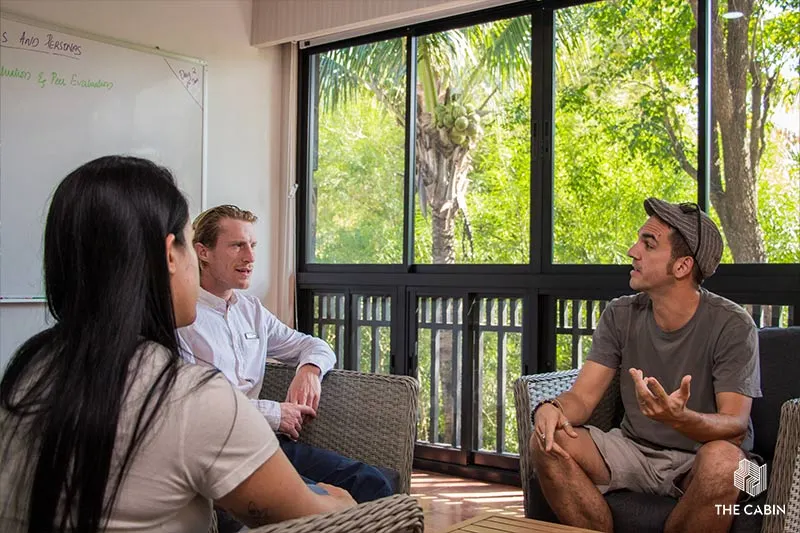
We want you to know that we are here for you if you need any help, especially if you’re trying to work a 12-step recovery programme on your own. We cannot overstate the importance of working with counsellors and attending treatment programmes while recovering from addiction. When you’re battling addiction, it can be overwhelming. Nobody knows this better than we do.
We are Asia’s longest-running and most respected rehab clinic, and we’ve helped countless thousands of people recover from harrowing addictions both here at our clinic and online through our intensive outpatient and group therapy programmes. Here at our rehabilitation centre, you can recover in the serene mountains of Thailand and discover healthy alternatives to drug abuse like yoga, fitness, and excursions in nature.
If you feel you need help working through the steps, especially in healing the wounds caused by your own wrong doing, reach out to us. It can make a big difference. We can get you help no matter where in the world you live.

Lee Daniel Hawker-Lecesne
Clinical Programme Director at The Cabin Lee graduated from Anglia Ruskin University in the UK with a degree in Behavioural Science and a postgraduate clinical focus on addictions from the University of Bath. Lee is a focused and ambitious individual who has in-depth training and experience in a broad range of clinical psychological interventions in the treatment of addiction, dual diagnosis, and complex trauma.